Anthropic raises $65 billion at a $965 billion valuation — and what that means for anyone using Claude
Anthropic closes a record $65B Series H at a $965B valuation, overtaking OpenAI as the world's most valuable private AI company.
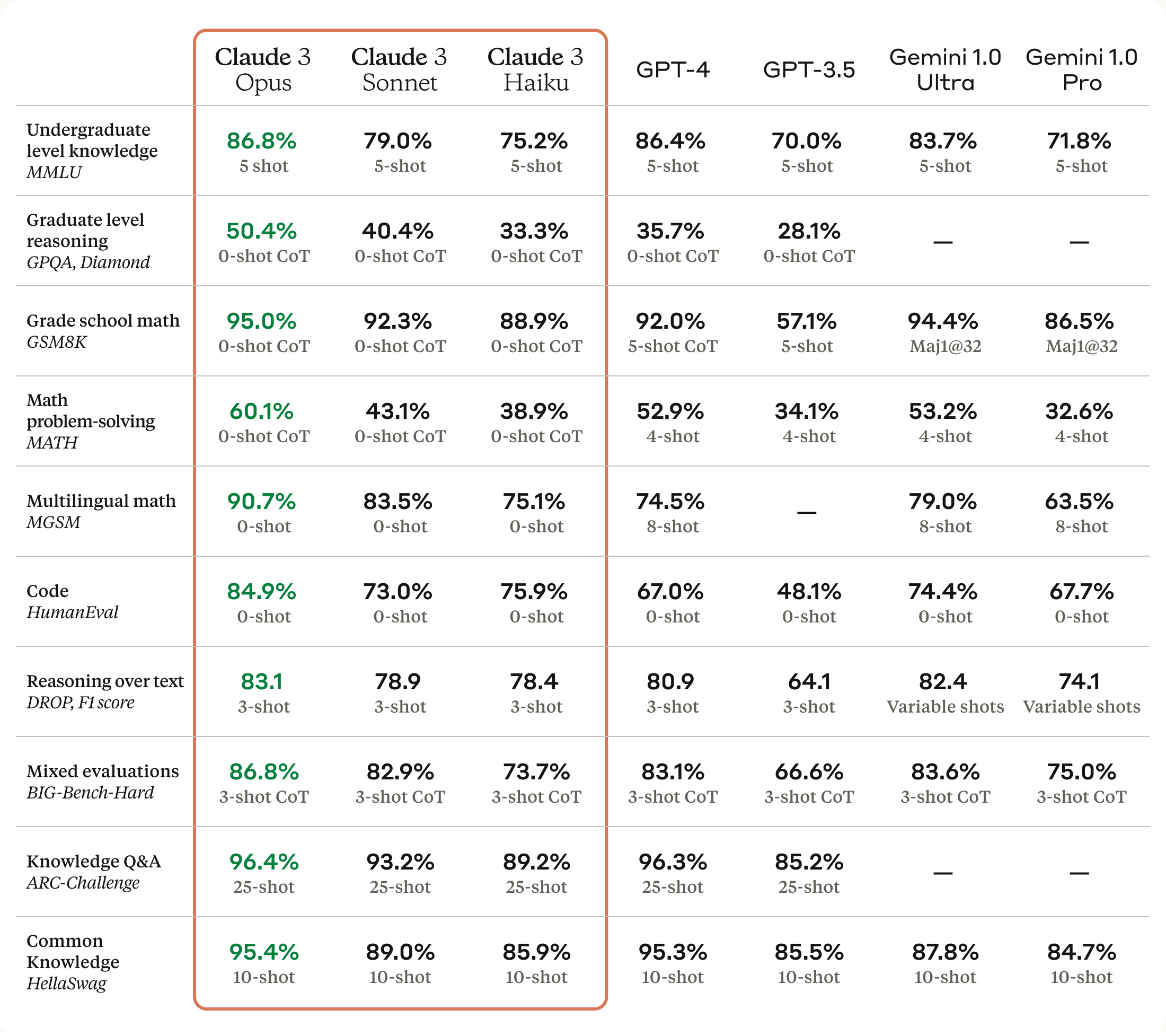
Anthropic just closed a $65 billion Series H round at a $965 billion post-money valuation, making it the most valuable private AI company in the world. That puts it ahead of OpenAI, which last raised at an $852 billion valuation in March.
For a company that didn’t exist until 2021, the trajectory is worth pausing on. Anthropic was valued at $183 billion in September 2025. By February 2026, that had risen to $380 billion. Now, three months later, it sits at nearly $1 trillion. IPO specialist Jay Ritter told Al Jazeera this pace is unprecedented for a startup at this scale.
Who put in the money
The round was led by Altimeter Capital, Dragoneer, Greenoaks, and Sequoia Capital, with Capital Group, Coatue, D1 Capital Partners, GIC, ICONIQ, and XN co-leading. The investor list reads like a who’s who of institutional capital, including Blackstone, Fidelity, T. Rowe Price, Temasek, General Catalyst, Lightspeed, and DST Global.
Of the $65 billion total, $15 billion represents previously committed capital from hyperscalers, including $5 billion from Amazon. That means roughly $50 billion was freshly committed in this round alone. Amazon has now invested $13 billion in Anthropic with a further $20 billion pledged against commercial milestones. Alphabet has committed up to $40 billion on top of at least $13 billion already invested.
Chip makers Micron, Samsung, and SK hynix also joined as strategic infrastructure partners, a signal that Anthropic’s compute requirements are large enough to matter at the level of global memory supply chains.
The revenue story behind the valuation
Numbers this large can feel abstract, but the underlying business has moved quickly to justify them. Anthropic reported a $47 billion annualised revenue run rate at the time of the announcement, up from $30 billion earlier this year and $10 billion for the full year prior.
Much of that growth is credited to Claude Code, Anthropic’s AI coding assistant, which has driven significant enterprise adoption. Eight of the Fortune 10 are now Claude customers. At $965 billion against $47 billion in run-rate revenue, Anthropic trades at roughly 20x sales. OpenAI, by comparison, sits at around 42x on trailing revenue, which makes Anthropic look relatively modest on that metric.
The company has said it expects to reach cash-flow positivity by 2028, a target it pushed back earlier this year as compute and training costs continued to rise.
What this means for you as a Claude user
The short answer: more capacity, fewer limitations, and a faster pace of model releases.
Anthropic has already expanded usage limits following this round. Claude Code users are seeing higher rate limits and reduced throttling for Pro and Max subscribers. That is a direct consequence of the compute investments being made with this capital.
On the infrastructure side, Anthropic has signed agreements with Amazon for up to five gigawatts of new capacity, with Google and Broadcom for five gigawatts of next-generation TPU capacity, and with SpaceX for access to GPU capacity across the Colossus 1 and Colossus 2 facilities. The SpaceX deal alone involves $1.25 billion in monthly payments through May 2029. These are not small bets on future demand; they are commitments sized for a company expecting significant continued growth.
Claude is now the first frontier model available across all three major cloud platforms: AWS, Google Cloud, and Microsoft Azure. That matters for enterprise buyers who are locked into specific cloud environments.
The new model that landed the same day
Alongside the funding announcement, Anthropic released Claude Opus 4.8. The headline improvements are in agentic coding, where benchmark performance moved from 64.3% to 69.2%, and in speed, where the new Fast Mode runs 2.5x quicker at 3x lower cost compared to previous models.
The model also ships with a 1 million token context window by default across the Claude API, Amazon Bedrock, and Vertex AI, with a maximum output of 128k tokens. Pricing is unchanged at $5 per million input tokens and $25 per million output tokens.
A new “dynamic workflows” feature in Claude Code is designed for very large-scale engineering tasks, the kind that span multiple codebases or require sustained context over long sessions.
Anthropic also quietly unveiled Claude Mythos Preview, a cybersecurity-focused model currently available only to a select group of organisations.
What about an IPO?
This round is widely expected to be Anthropic’s last private fundraise. Forge Global has reported, citing people familiar with the matter, that Anthropic is considering an IPO as early as October 2026. No S-1 has been filed and the company hasn’t confirmed timing, but the investor mix here, including large public market funds like Fidelity and T. Rowe Price, points toward a company preparing for public markets rather than another private round.
For anyone with exposure to Amazon or Alphabet, an Anthropic IPO would be a notable event. Amazon’s total commitment of up to $33 billion and Alphabet’s commitment of up to $53 billion represent some of the largest single bets either company has made on an external AI provider.
The bigger picture
Anthropic was founded by former OpenAI researchers with an explicit focus on AI safety research. That framing hasn’t gone away, and the stated use of funds includes advancing safety and interpretability research alongside compute expansion and product development. Whether that balance holds as commercial pressures intensify is something worth watching.
What’s clear right now is that the two leading frontier AI labs have collectively raised over $180 billion in the past few months, are investing in compute at a scale that involves gigawatts and chip supply chains, and are approaching valuations that put them alongside some of the largest public companies on earth. The pace of capital deployment into this space is simply without precedent.
If you are building on Claude, integrating it into your business, or just using it daily, the practical effect is a company with substantially more runway to invest in reliability, capability, and access. That tends to be good news for the people actually using the product.